Health inspections are not meant to be a surprise, but they often feel like one. The kitchens that pass cleanly are the ones that treat inspection standards as everyday standards. Use this checklist to walk your space the way an inspector will.
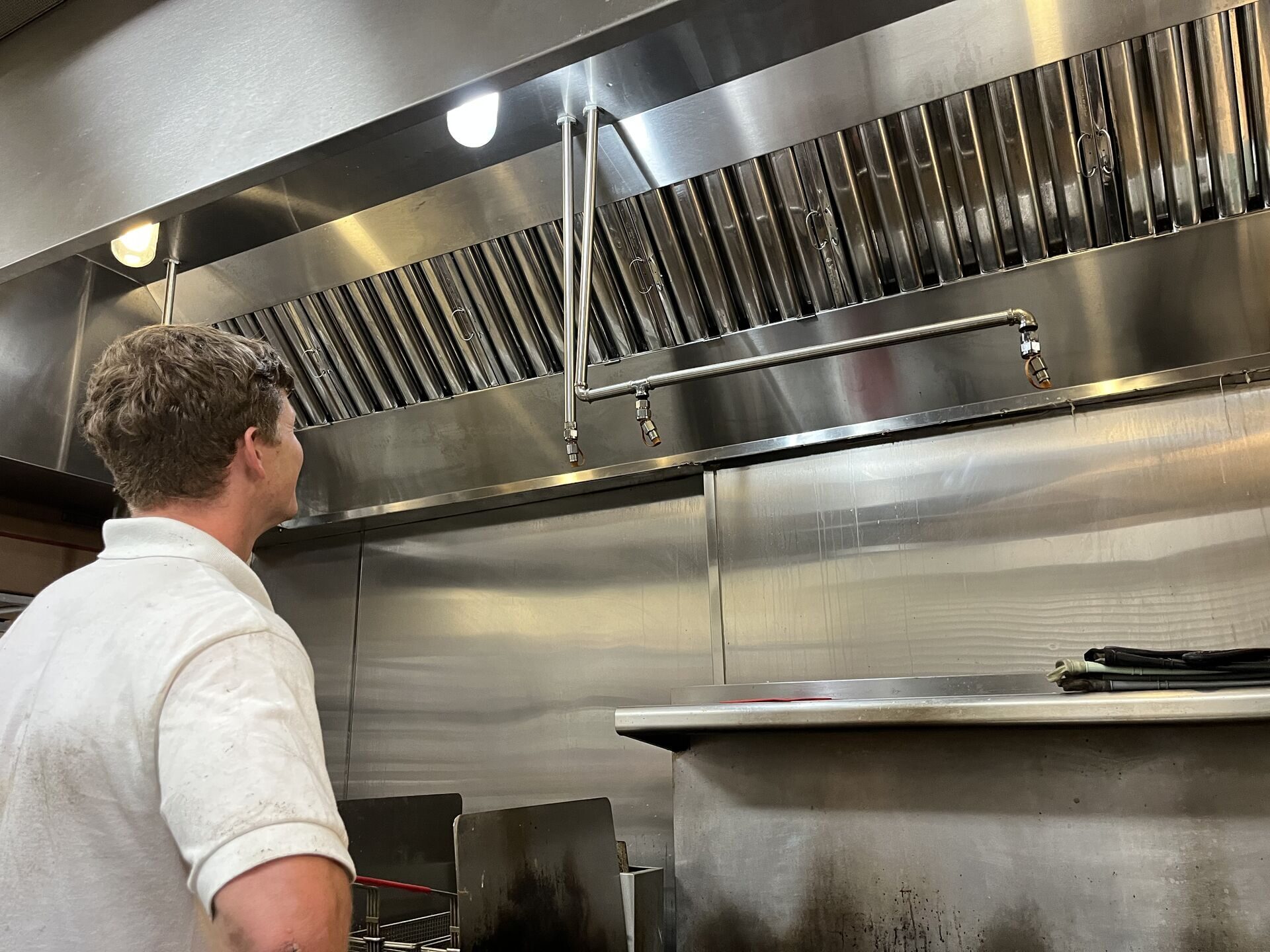
- Hood and filters: no visible grease buildup, filters in place and clean, current cleaning certificate on hand.
- Floors and grout: no standing water, no grease film, drains clear and odor-free.
- Walk-in cooler and freezer: holding correct temperatures, gaskets clean, shelving free of spills.
- Prep surfaces: sanitized, no cross-contamination risk, cutting boards in good condition.
- Hand-washing stations: stocked, accessible, hot water working.
- Equipment interiors: ovens, fryers, and grills free of carbon buildup that can flake into food.
- Storage areas: food off the floor, labeled and dated, no pest evidence.
- Dish area: warewasher reaching sanitizing temperature, three-compartment sink set up correctly.
- Ceilings, walls, and vents: no dust, grease, or mold in overlooked corners.
- Documentation: cleaning logs, temperature logs, and certificates organized and current.
The spots most kitchens miss
The visible line usually looks fine. Points are lost in the places nobody scrubs during a normal shift: the underside of equipment, the grease that creeps into grout lines, the dust on ceiling vents, and the interior of ovens and fryers. These are exactly the areas a periodic deep clean is built to address.
Where a deep clean fits in
Daily cleaning keeps the surface presentable, but it cannot reach embedded grease and buildup. A scheduled deep clean resets the kitchen to a true baseline, so daily work has less to fight against and your next inspection starts from a stronger position.
We help Middle Tennessee restaurants stay inspection-ready with deep cleaning that targets the grease and grime routine cleaning leaves behind, on a schedule that fits around your service.