If you run a commercial kitchen, you have seen NFPA-96 referenced on cleaning reports and insurance forms. It is the National Fire Protection Association standard for ventilation control and fire protection of commercial cooking operations, and it is the framework your fire marshal and insurer rely on. Here is what it means for your business without the jargon.
What the standard covers
NFPA-96 governs the entire grease-handling path of your kitchen: the hood, the filters, the ductwork, and the exhaust fan on the roof. The core idea is that grease is combustible, so the standard sets rules for how that system is built, maintained, and cleaned to keep a small flare-up from becoming a structure fire.
The cleaning requirement, in practice
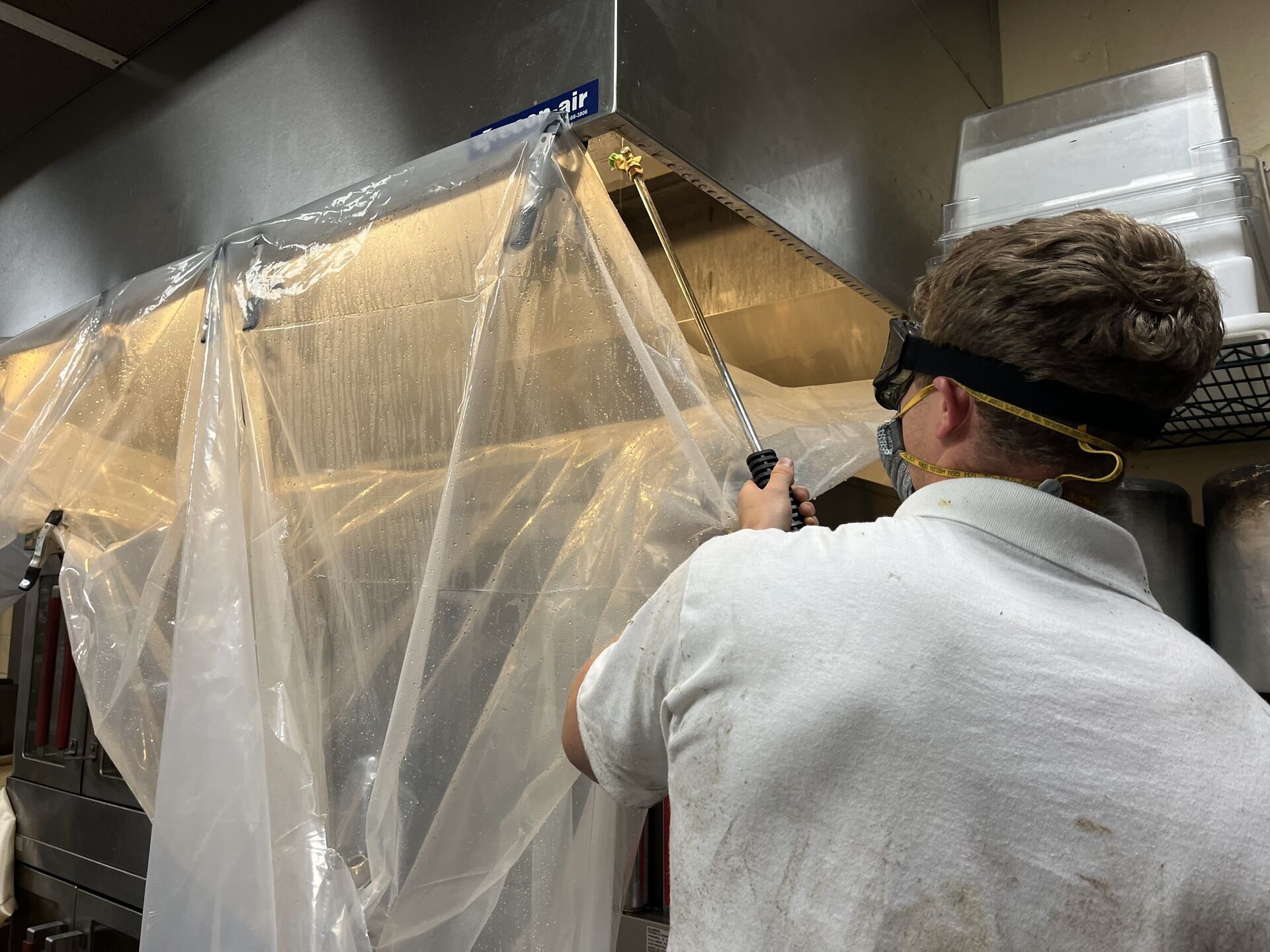
The standard requires that the exhaust system be inspected by a qualified company and cleaned when grease has accumulated, with frequency driven by cooking volume. It also calls for the whole system to be cleaned, not just the visible hood. Cleaning to bare metal where accessible is the expectation, and inaccessible sections must be noted.
Documentation is part of compliance
After service, you should receive a report listing the date, the areas cleaned, any areas that were inaccessible, and a certificate or sticker showing the next due date. Keep these records. They are what you hand an inspector, and they are what protects your insurance claim if a fire ever occurs.
Who is responsible
Responsibility sits with the operator. Even if you lease your space, you are generally the one accountable for keeping the system clean and the records current. That is why a documented, recurring schedule matters more than a one-off cleaning when something looks dirty.
How to stay ahead of it
- Set a recurring service interval matched to your cooking volume.
- Keep every cleaning report and certificate in one place.
- Ask your provider to photograph the system before and after.
- Confirm the rooftop fan and full duct run are included, not just the hood.
Compliance is not complicated once you have the right partner and a schedule you can trust. We handle the cleaning, the photo documentation, and the paperwork submitted to your fire marshal, so the system stays safe and the records are always ready.